
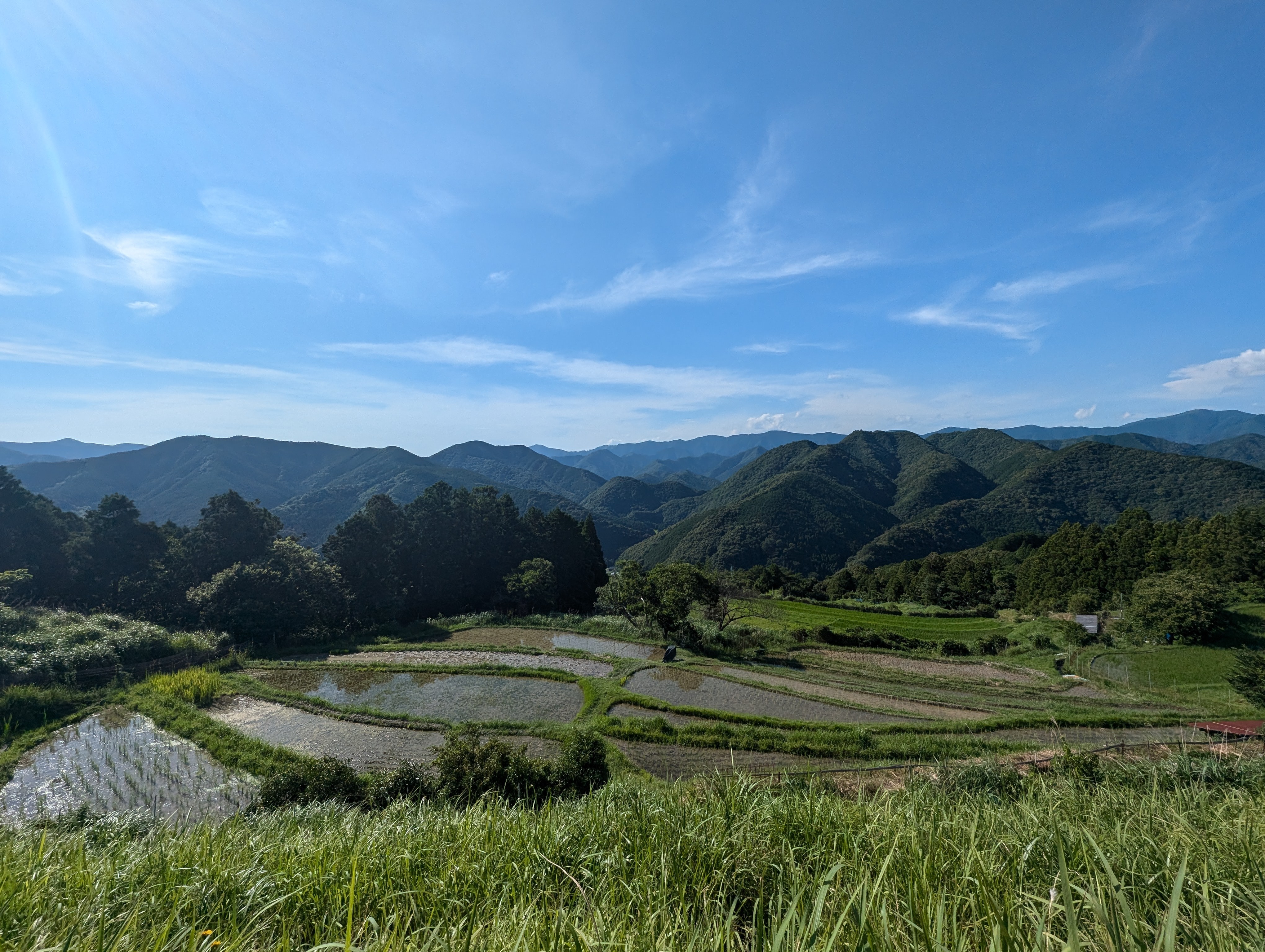
One of the highlights of our trip this summer was the five days we spent on the Kumano Kodo. This is an ancient pilgrimage route in Japan, similar to the more famous Camino de Santiago in Spain. While we are not spiritual, we wanted to walk some of the trail in order to get some hiking in and enjoy nature. When I was planning this leg of the trip, I really struggled to find information about how vegan-friendly it would be. I’m hoping this post will help others to plan their trip or at least manage their expectations of it. For reference, I took my trip in July 2024.
It is possible to book places that have kitchen use so you can take supplies (there are very few shops along the way where you could pick up anything useful) and fend for yourself. We wanted to have catered meals because I was worried we’d be too tired to cook every evening, and concerned about where we’d find supplies along the way. I really wanted us to be well fueled for all the walking. The accommodation with meals that we booked was expensive, probably the most expensive of our whole two month trip, but for me the money was worth it. There were hardly any shops along the route, just one convenience store in each village usually (except for Katsuura, which is much bigger, and Takahara, where there was nothing at all), so it would have been a struggle. Plus convenience stores don’t always have vegan options. I considered bringing instant noodles, but I wanted us to be getting enough protein and calories. This was definitely the right approach for us.
On that note, I’d also recommend taking your own snacks along. We were armed with a load of Clif bars and jerky from home, plus a few chocolate bars for a sweet treat in the evenings. It really is slim pickings for vegans on the trail itself.
Also, it’s a very long trail. We did not walk the whole thing, not even close, and there are lots of different sections you can do. This is certainly not an exhaustive guide! Our route was Takijiri to Takahara, to Chikatsuyu, to Yunomine Onsen, to Katsuura.
Official Kumano Travel Website
We booked our accommodation and luggage transfer service on the official Kumano Travel website. The big disadvantage for me is that you have to submit your accommodation booking request all in one go (in my case, four nights of accommodation requests at the same time, including back up choices) and it can take them up to 30 days to get back to you with an approval or rejection. It took almost the full 30 days for my booking to be approved, which was a bit frustrating because I never really understood how it could take that long. Definitely don’t leave it till the last minute to make your booking, bearing that in mind.
The main advantage of this is that it’s the local community service and the one that visitors are encouraged to use. And another key advantage for vegans is that you can filter your search just for guesthouses that cater to vegans. The system is based on five different types of vegetarian diet, with vegan being Type E. The official site makes it very clear that you cannot just turn up on the day and request vegetarian or vegan food, it has to be organised in advance. It also kind of suggests that you will have a much easier time if you agree to eat dashi (fish stock) because it’s in everything. But don’t be discouraged, vegans! I booked everything under Type E vegetarian and we had no difficulties on the trip.
While booking our accommodation, I also booked us the luggage transfer service. This meant that our big backpacks got picked up each morning from our accommodation and were waiting for us when we arrived at our new guesthouse in the afternoon, so we could just take our day bag out on the trails with us. We did see a few people walking the trails with their massive backpacks, but I know I would have been miserable. The luggage transfer went really smoothly for us. I believe it has to be booked in advance, you can’t just turn up and request it, so this is definitely something to consider while you’re planning.
In the end, we got all of our first choice accommodation except for the last night. Here’s where we stayed and what food we got.
Suzushiro Rental House, Takahara


On our first day, we travelled from Osaka to Takijiri, the official start of the Kumano Kodo (or, one of the starting points), and then walked a few hours uphill to Takahara, where we were rewarded with spectacular views. Our accommodation here was our favourite of the entire two months we were on the road. We had this private cottage all to ourselves, and here you can see the view from the deck. It was absolutely incredible!
We were a little unsure what to expect from the food. I thought it would be pretty basic and unimaginative, but as long as I got some rice and protein I wasn’t too worried. It very much surpassed my expectations.

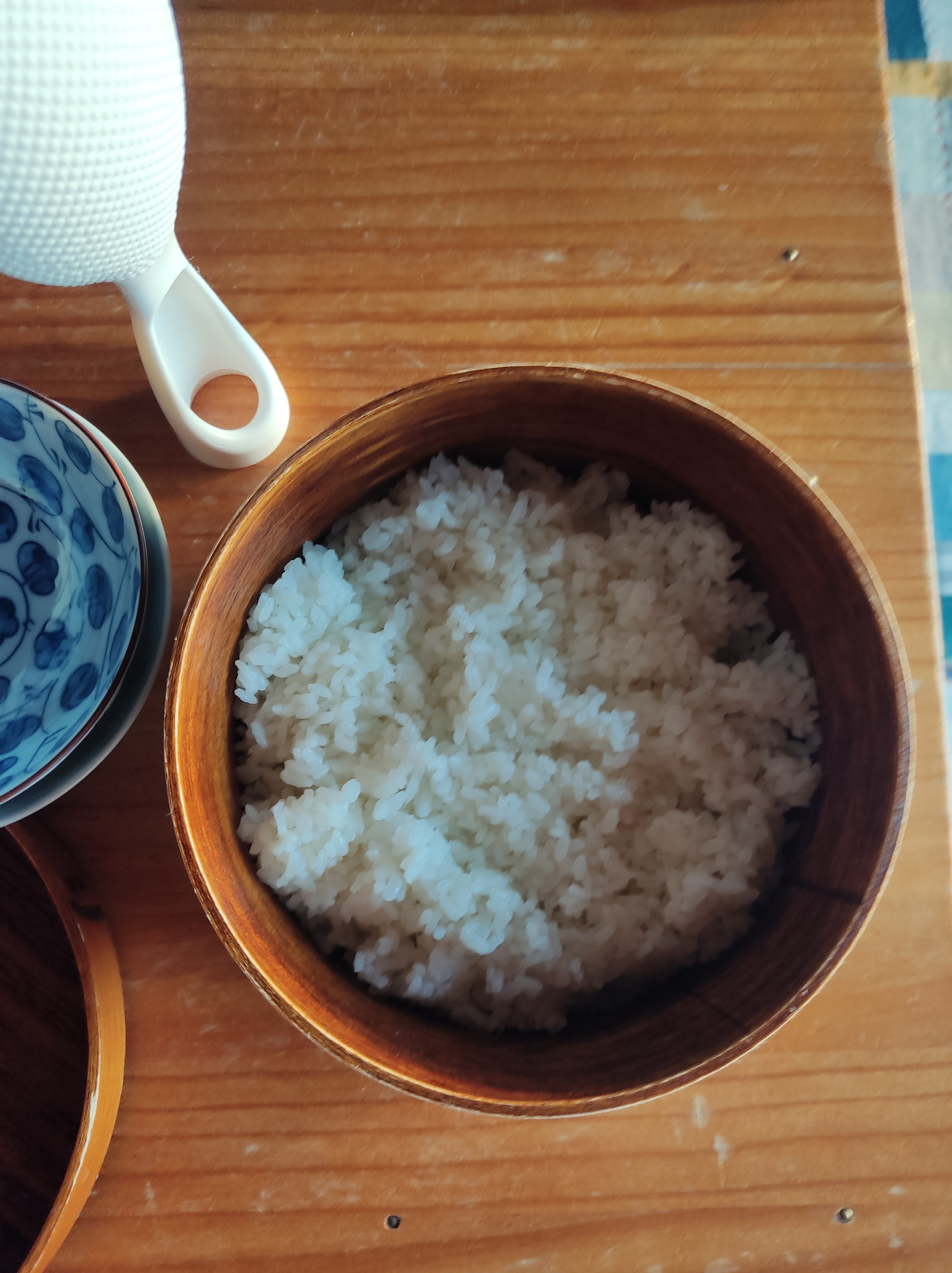

The guesthouse owner brought our dinner over at a pre-arranged time. Most of it was ready to be served: a hearty dish of rice, and a bento box each. This contained some fun pickled vegetables, noodles, and tempura, which was really exciting. We also had a kind of mushroom hotpot which had to be cooked for ten minutes over a little burner. The host made sure to tell us that there was no dashi in the stock, which I appreciated. It was fantastic! Everything was tasty and well seasoned, and we loved the variety of ingredients.

Breakfast was also delivered at a pre-arranged time, and this time no additional heating was required. We had some miso soup, salad sandwiches, pickles, salad, and nuts. I’m not a salad lover, so the sandwiches were not a big hit for me – I would have preferred some fried tofu in there for protein and sustenance. But the bread was excellent, and the other components were good too.

On our way from the cottage back onto the Kumano Kodo trail, we picked up our packed lunch from the owners. We’d been a little concerned about how big the lunch boxes might be, but we could comfortably fit two of them in our 20 litre backpack, so that was a relief. This one contained rice, mock meat, potatoes, and vegetables. Once again, we were very impressed with the seasoning, nothing was bland. This wasn’t just fuel, it was proper food!
Guesthouse Sora Chikatsuyu, Chikatsuyu

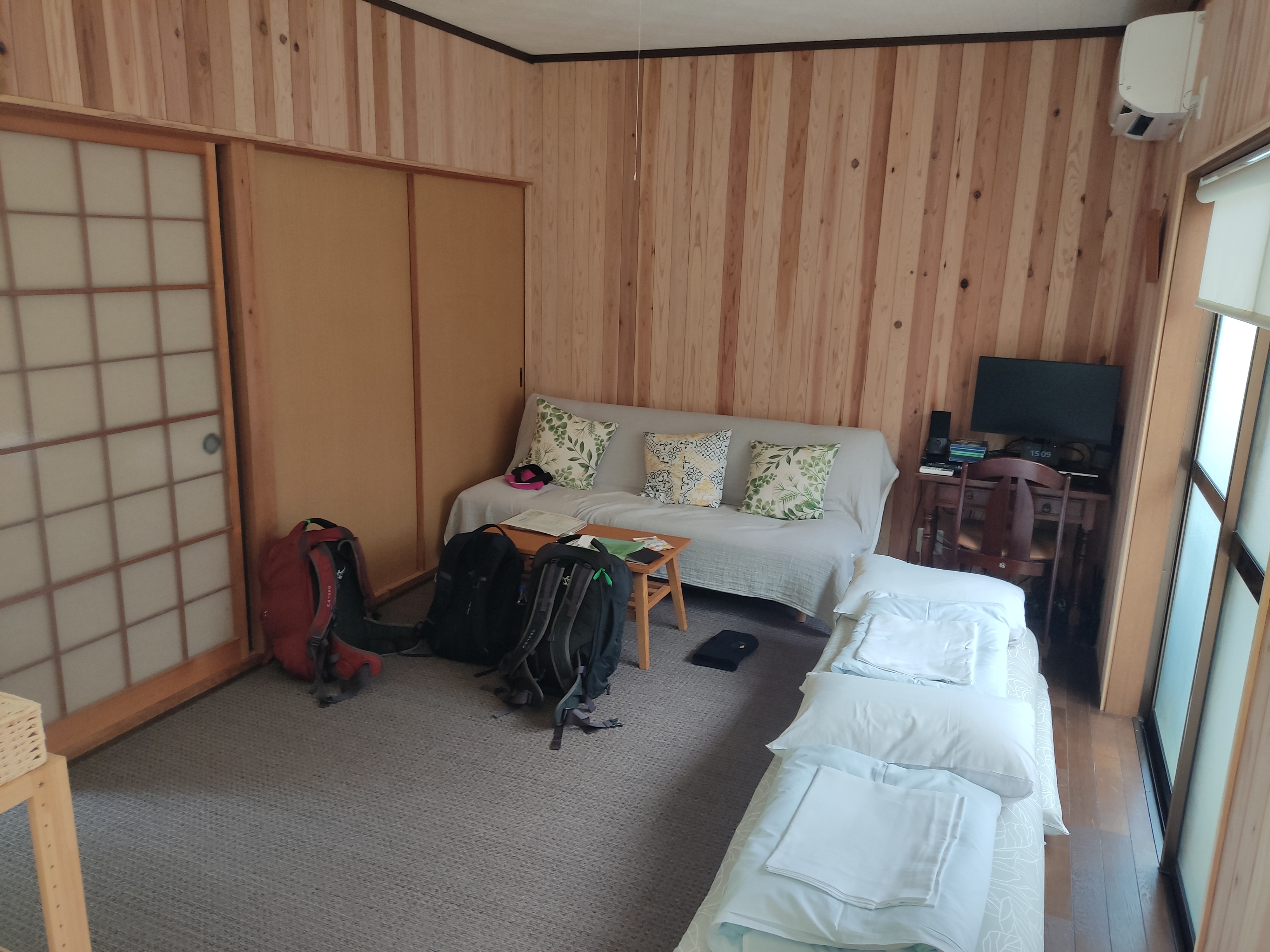
After the privacy of our own cottage, we were now into guesthouse territory. It was a tough day of walking to get to Chikatsuyu, so we were ready for a good rest and good meal.
This was a lovely place to stay, with hosts who clearly deeply care and take great pride in what they do. They helped us to adapt our plans for the next day, when rain was forecast, and arranged breakfast times based on that.
Our evening meal and breakfast were communal with the other guests. We’re quite introverted by nature so it is not my favourite dining arrangement, but it was great to hear from other travellers and our hosts about the trails and life on the Kumano Kodo. The hosts also kindly took us out on a short walk after dinner to show us fireflies, which was really special.
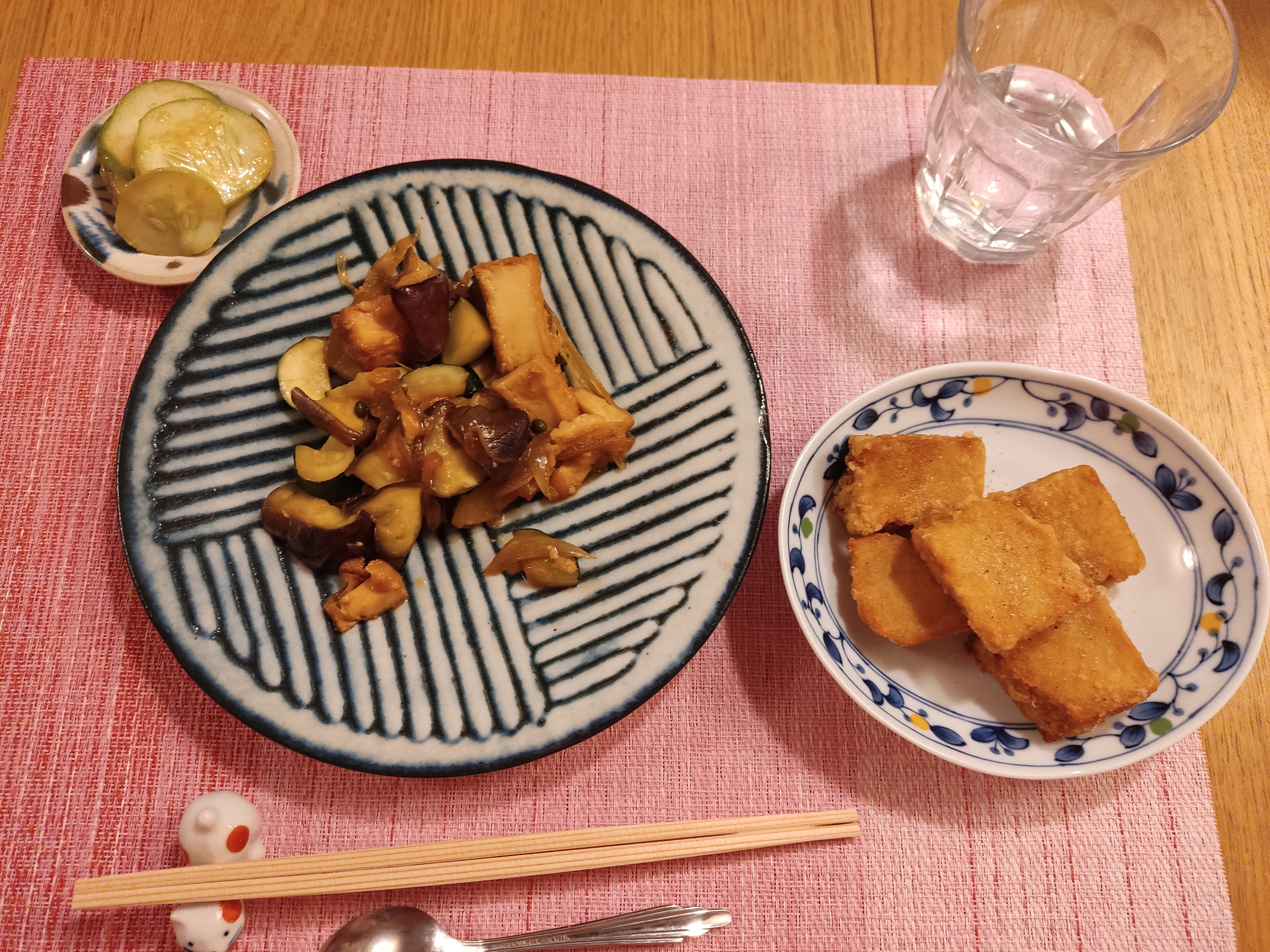
The meals were also good! Our dinner was fried tofu, mushrooms, pickles, and rice. The fried tofu was beautifully seasoned and one of the best things we ate on our Kumano Kodo trip.
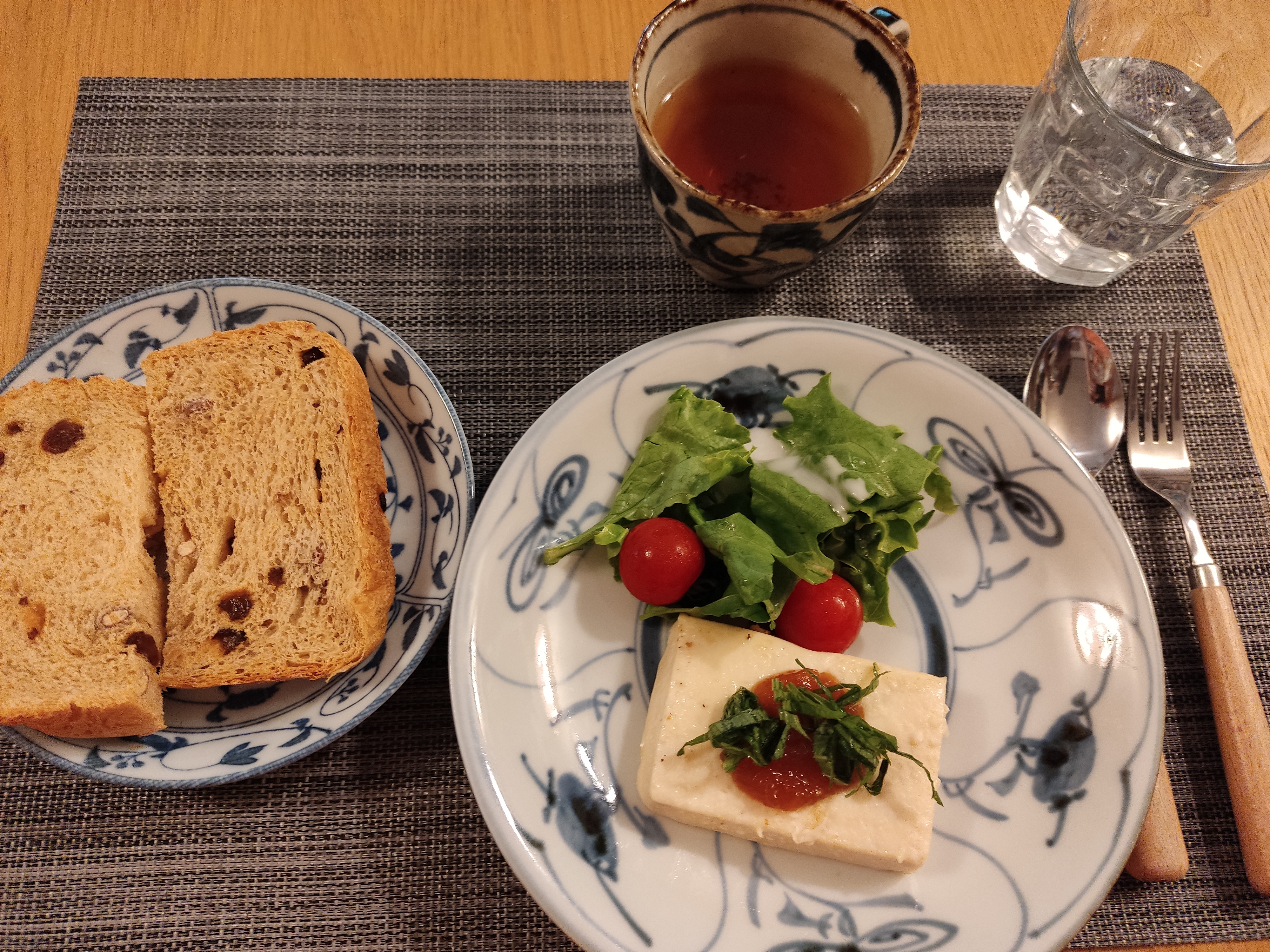
For breakfast we got some really thick and delicious bread, along with tasty tofu and salad, which was all quite filling – it was my favourite breakfast of the trip. As always though, I believe salad has no place on a breakfast plate!

Our packed lunch included two rice balls, a spring roll, and some vegetables. The hosts told us they grow a lot of their own food in their garden (although monkeys do try to steal their vegetables). Again, it was filling and tasty. I definitely recommended this spot for vegans!
Onsen Minshuku Wadama, Yunomine Onsen
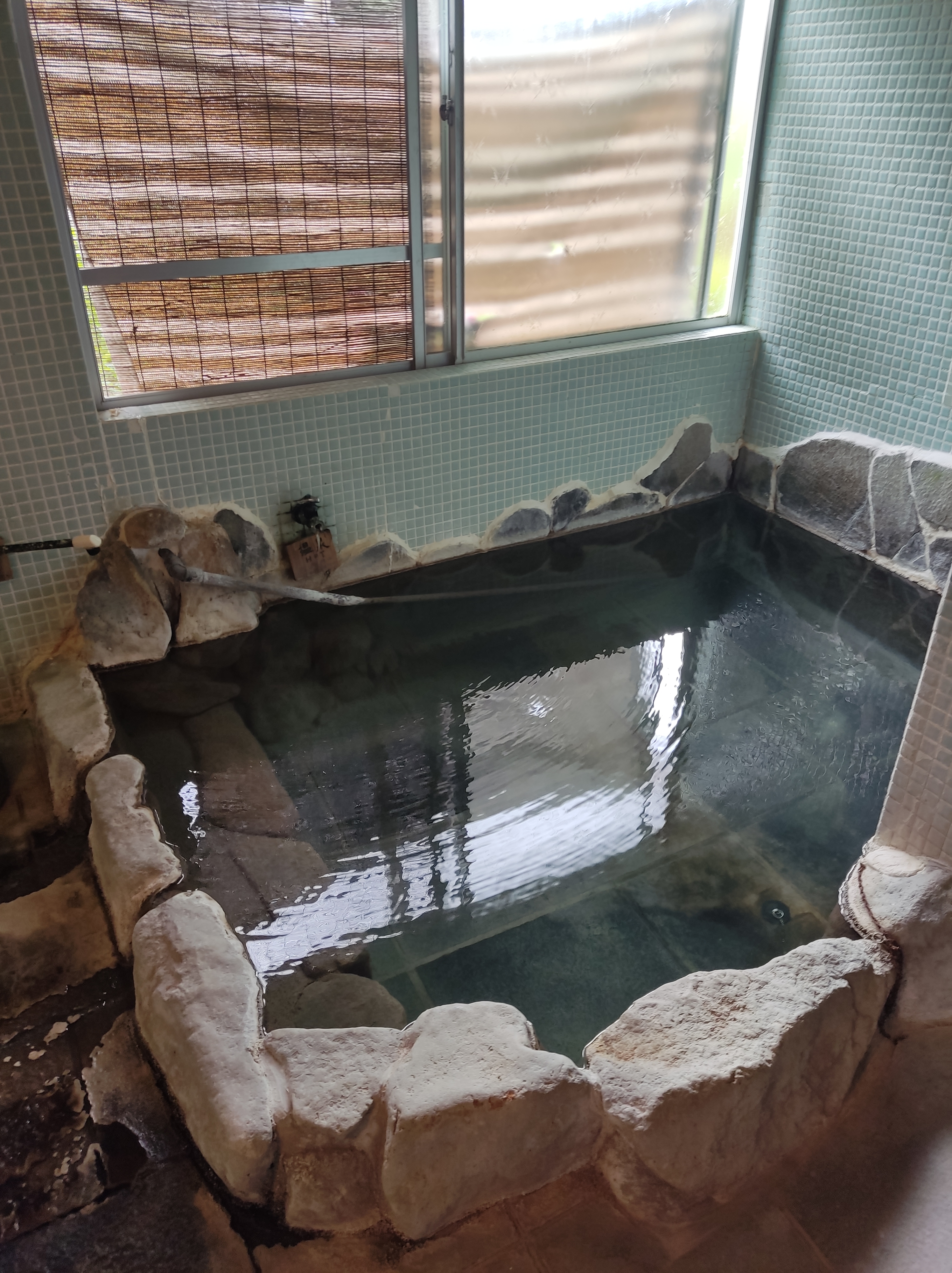
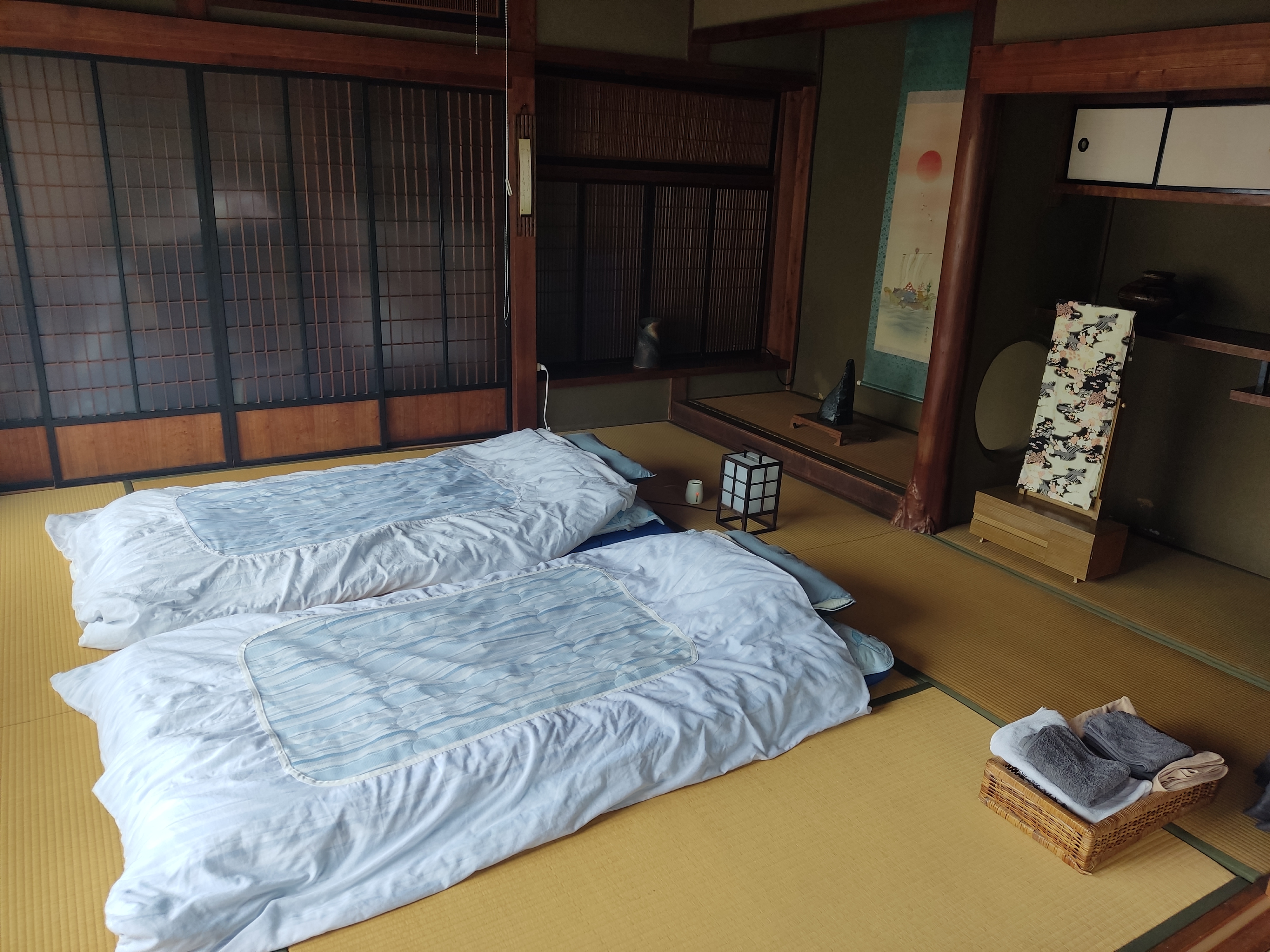
We limited our walking en route to Yunomine Onsen, because heavy rain was forecast in the afternoon. We took the early morning bus from Chikatsuyu to Hossinmon-oji and walked eight kilometres to Hongu, which is home to a large shrine complex and the world’s biggest torii gate. There was not very much climbing on the walk, so it was a very pleasant morning indeed! Just as we finished exploring Hongu, the heavens opened and the rain commenced, so we got the bus to Yunomine Onsen and settled in for some relaxation and food.
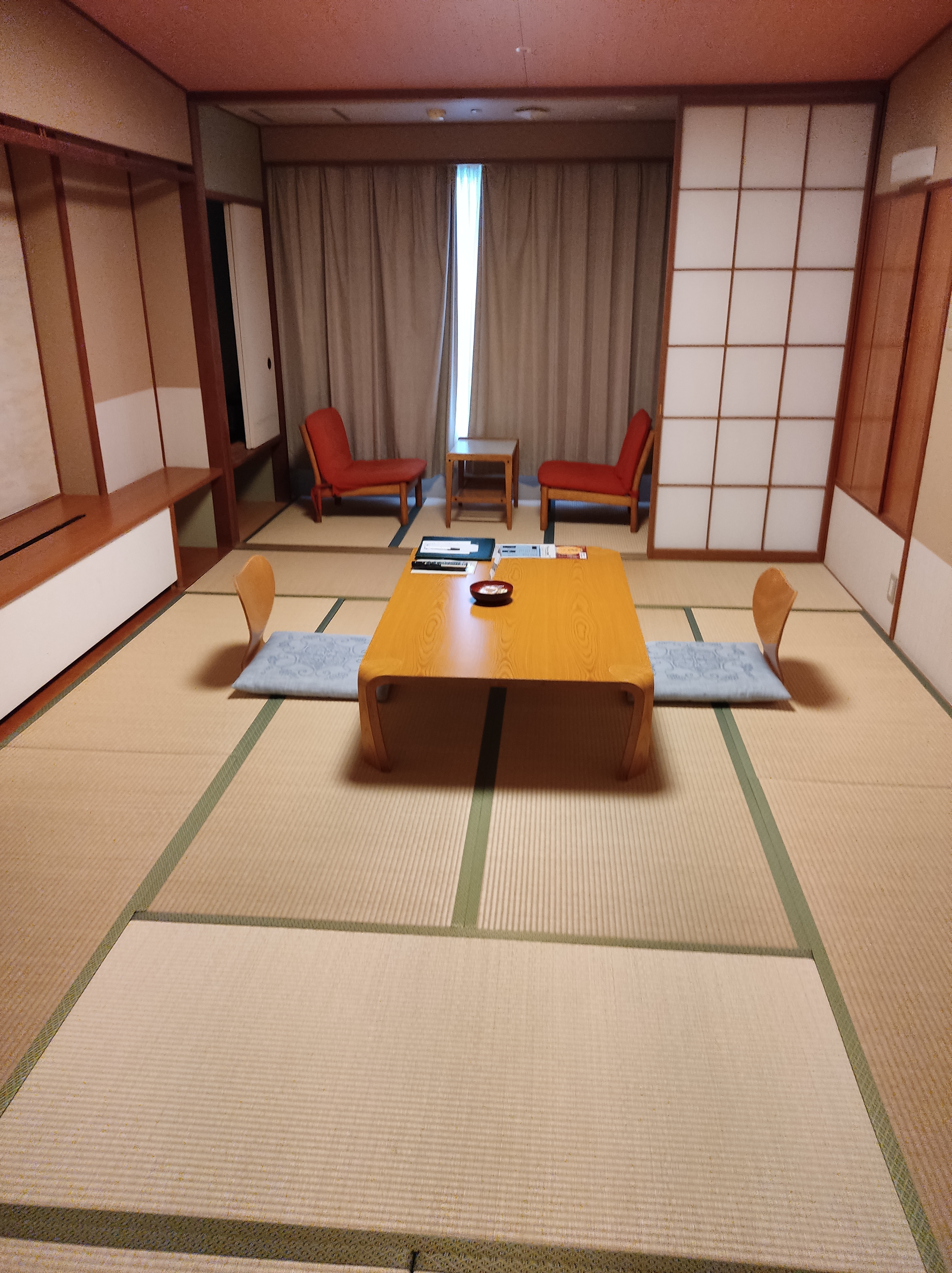
This was a really special place to stay, a very traditional old building. To be honest, I felt a little too large and clumsy for it, like I was thundering into everything! The bedroom was really spacious. Best of all, there was a private onsen, which we enjoyed very much. Public baths are very popular in Japan, and especially in this little town, but we are a bit too British to embrace public nudity. This private one was just what we wanted!
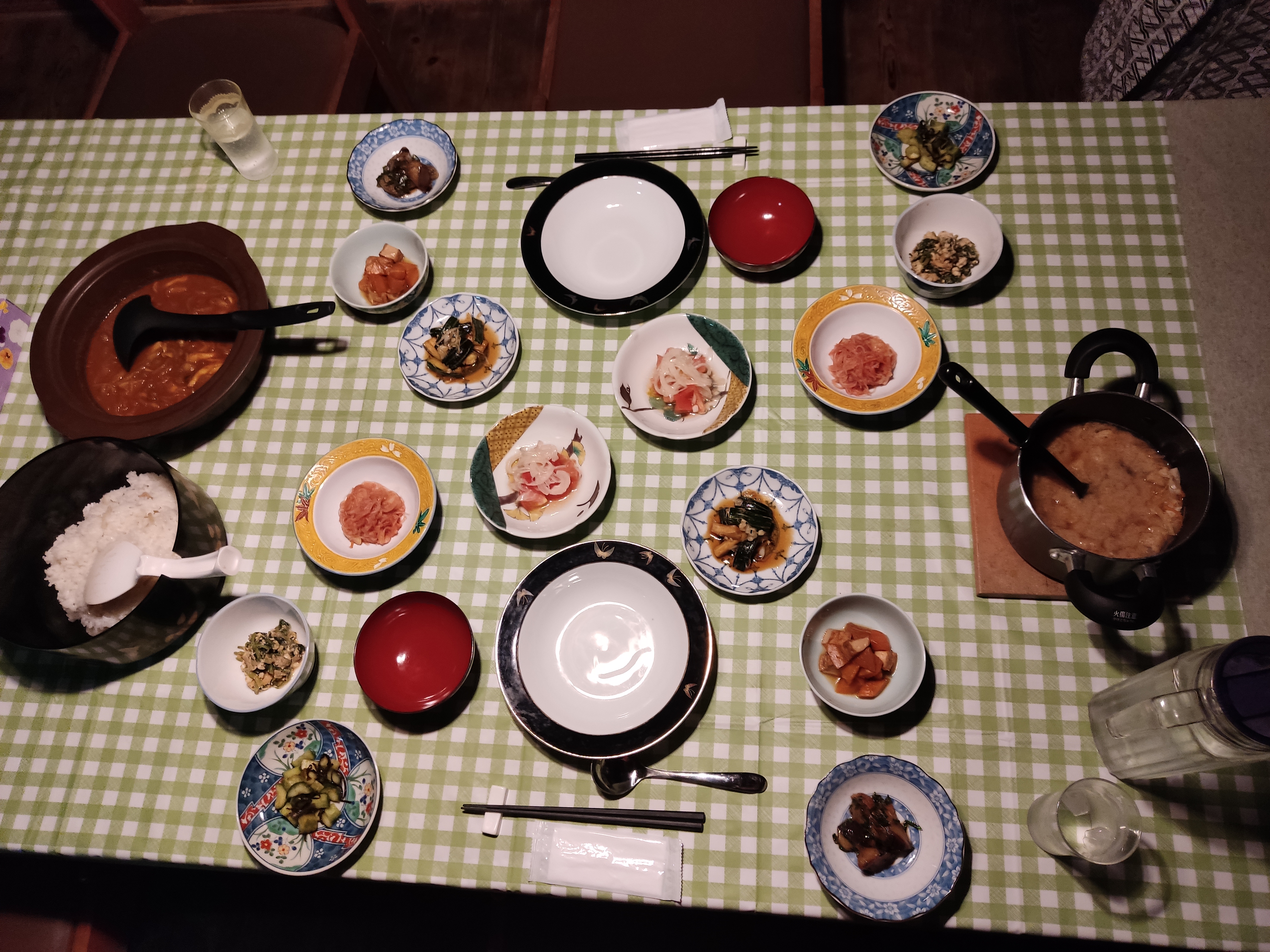
For dinner, we had seven small dishes of vegetables prepared in different ways, plus some soup, rice, and a curry. There was plenty of food and we were really full afterwards. The dishes were well seasoned too, this felt like the work of someone who knows what they’re doing with vegetables. Each dish tasted different, there was a good mix of spicy and not, it was just really well balanced.

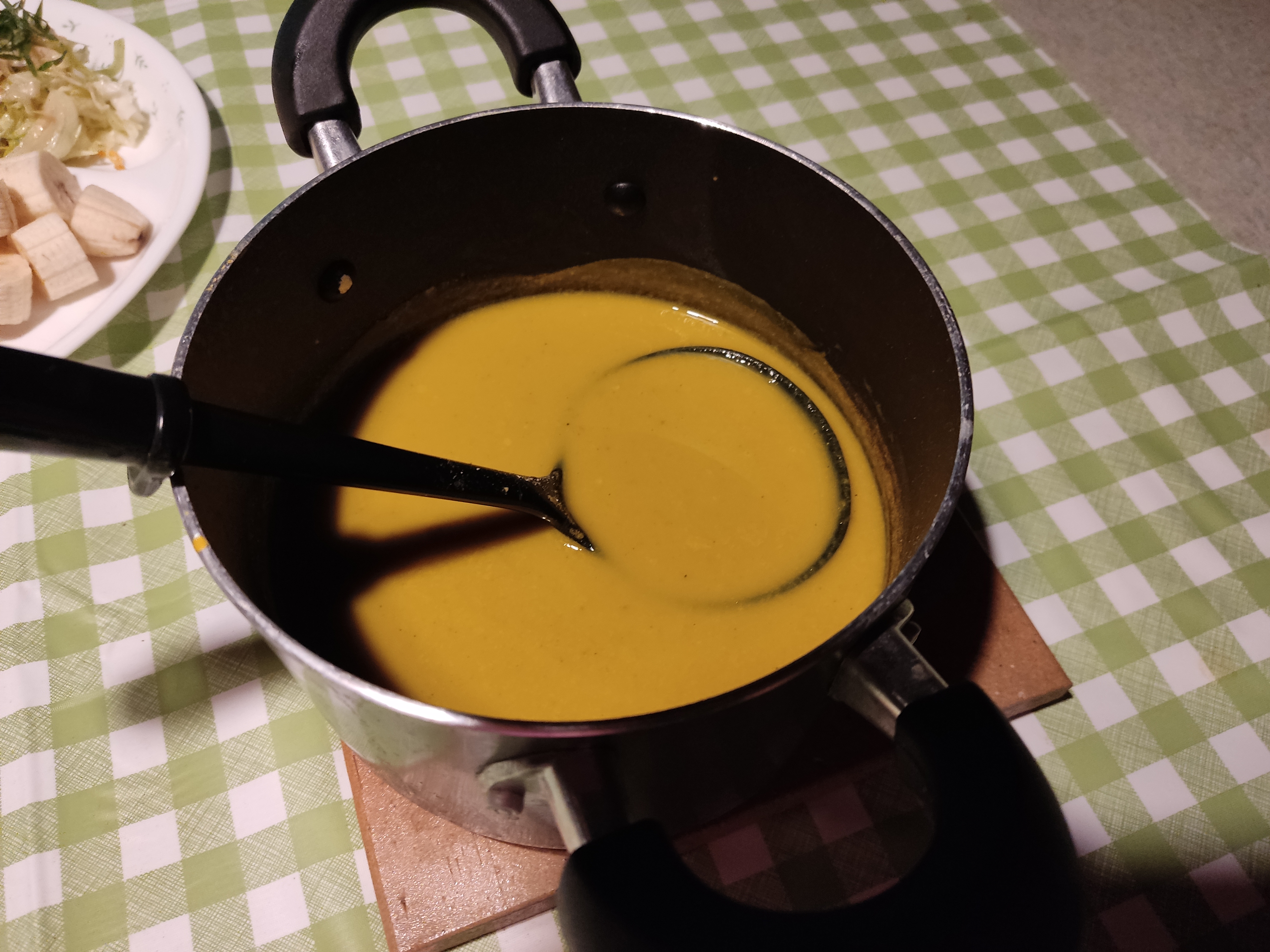
For breakfast we had a soup, cooked vegetables, salad, banana, apple, a bagel, and a kind of creamy tofu that was a bit like cottage cheese. It was an eclectic mix for us personally, but the bagel and tofu were highlights and definitely helped to keep us full.

This guesthouse does not provide packed lunch, but through the reservation system we were able to request that someone else provide it for us instead. Our lunch boxes were delivered nice and early to our guesthouse, while we were having breakfast. It was a hearty lunch, with rice, mock meat, potatoes, and vegetables. It was good and filling, and once again we were impressed with the seasoning. My expectations were so low, honestly – in Europe I think if you request vegan options from places that don’t specialise in them, you’d probably get boiled vegetables and maybe a bit of unseasoned tofu!
Hotel Urashima, Katsuura

The rain continued to pour, and we were worried our outdoor activity might be rained off, but happily that was not the case. Through the reservation system, we had booked a boat journey from Michi-no-Eki Kumanogawa (which we reached by bus from Yunomine Onsen) to Shingu. We were well bundled up in waterproofs, and it was a pleasant time despite the rain. Shingu was home to a colourful shrine which we enjoyed. All our planned walking for this day and the following one had to be cancelled due to the downpours, so we pushed on from Shingu to Nachi to see the last shrines of our trip, including an impressive waterfall. Finally, we got the bus from Nachi to Katsuura and our hotel for the night.
Hotel Urashima was not our first choice accommodation – we wanted a small guesthouse with vegan meals, but they were fully booked so instead we got this massive resort with a buffet with labelled allergens. It was not really the experience we were looking for, but it was perfectly fine. This is your encouragement to get your booking request in early if you want to ensure you get your first choices! The hotel was a bit inconvenient to reach, as you have to take a ferry out there. But on the plus side, the ferry was shaped like a turtle! The hotel is actually a huge resort, and it’s such a maze that we were actually handed a map on arrival, but staff explained everything well at check in. The room was nice and quite large, and had a lovely view of the sea.
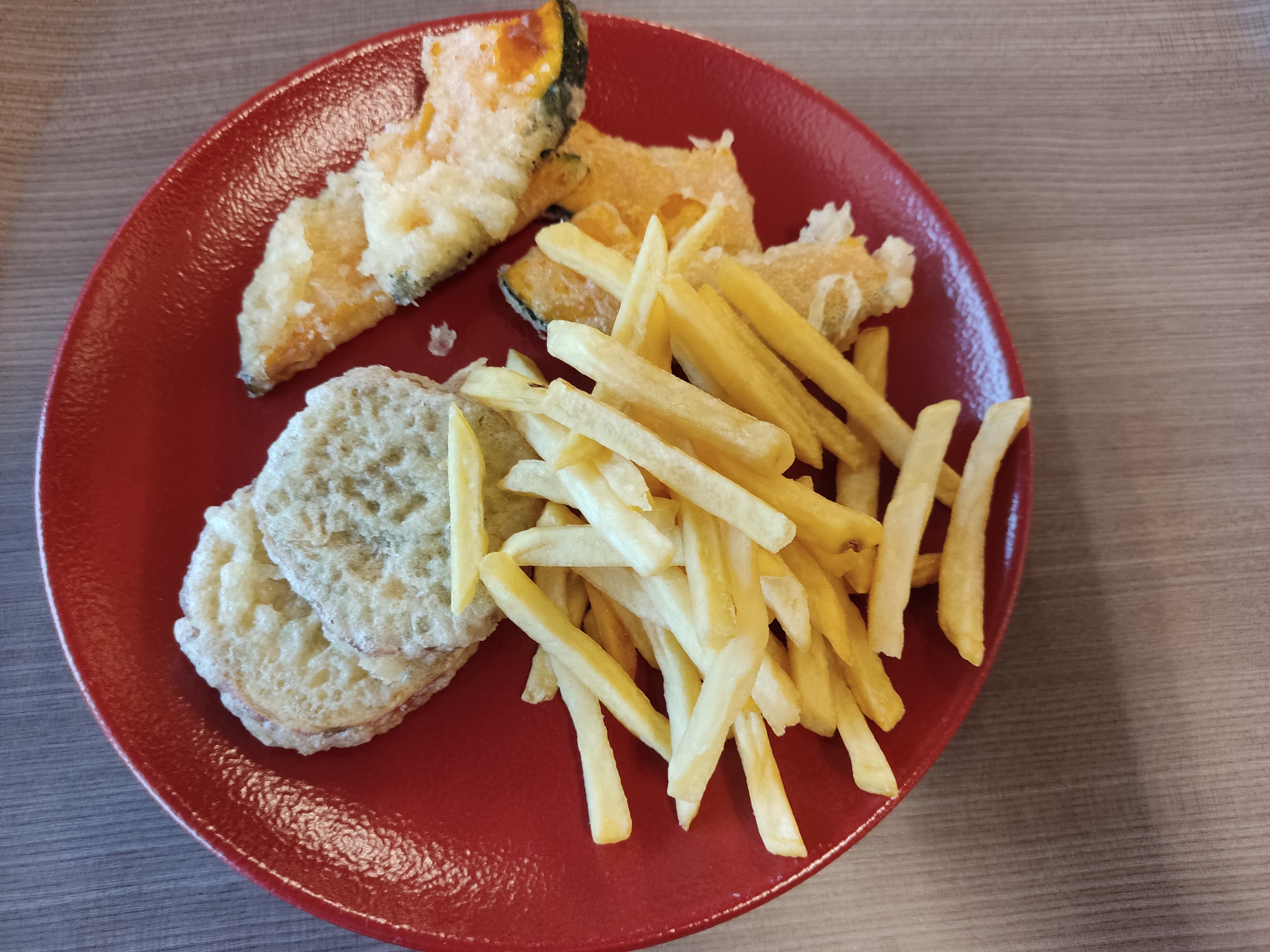
Meals are provided at the buffet in one of the hotel restaurants. Each dish is labelled in Japanese and English with allergens. According to the allergen labelling, vegan options at the evening buffet included rice, boiled vegetables, pickled vegetables, vegetable soup, fries, sweet potato and pumpkin tempura, and burdock chips. At breakfast there was rice and fruit. All the cereal was Kellogg’s, which I think is never vegan. I was a bit too tired to do much investigating of the options, so I just took comfort in a plate of beige food: tempura and fries! It was quite the change from the nice homemade meals of the previous nights, but it had its merits, and there were more varied options available.
Hiking the Kumano Kodo

As I said, before setting off on our hike I really struggled to get a sense of how vegan-friendly the Kumano Kodo would be. I also struggled to understand how challenging it might be and what level of fitness was required. Everything I read suggested that any “reasonably fit person” should be able to do it, but that’s so vague. The official website is helpful in this regard as it does show the profile of different stages of the trail, so you can easily get a good sense of how it compares to hikes you’ve done previously. The area is also tolerably well connected by bus routes and I don’t think it’s that common (or certainly not in July when we were there) to attempt the entire trail – you can pick and choose your sections. We encountered people of many ages along the trail, from teenagers hiking with their parents to couples in their 50s. Most people looked pretty fit and had decent hiking gear (hiking poles, etc – though we didn’t have poles and we got on fine, but would have struggled if we’d attempted to walk in the heavy rain). We do a lot of walking, and we made sure that none of our daily routes were more challenging than any walks we’ve done in the past, and we managed everything comfortably.
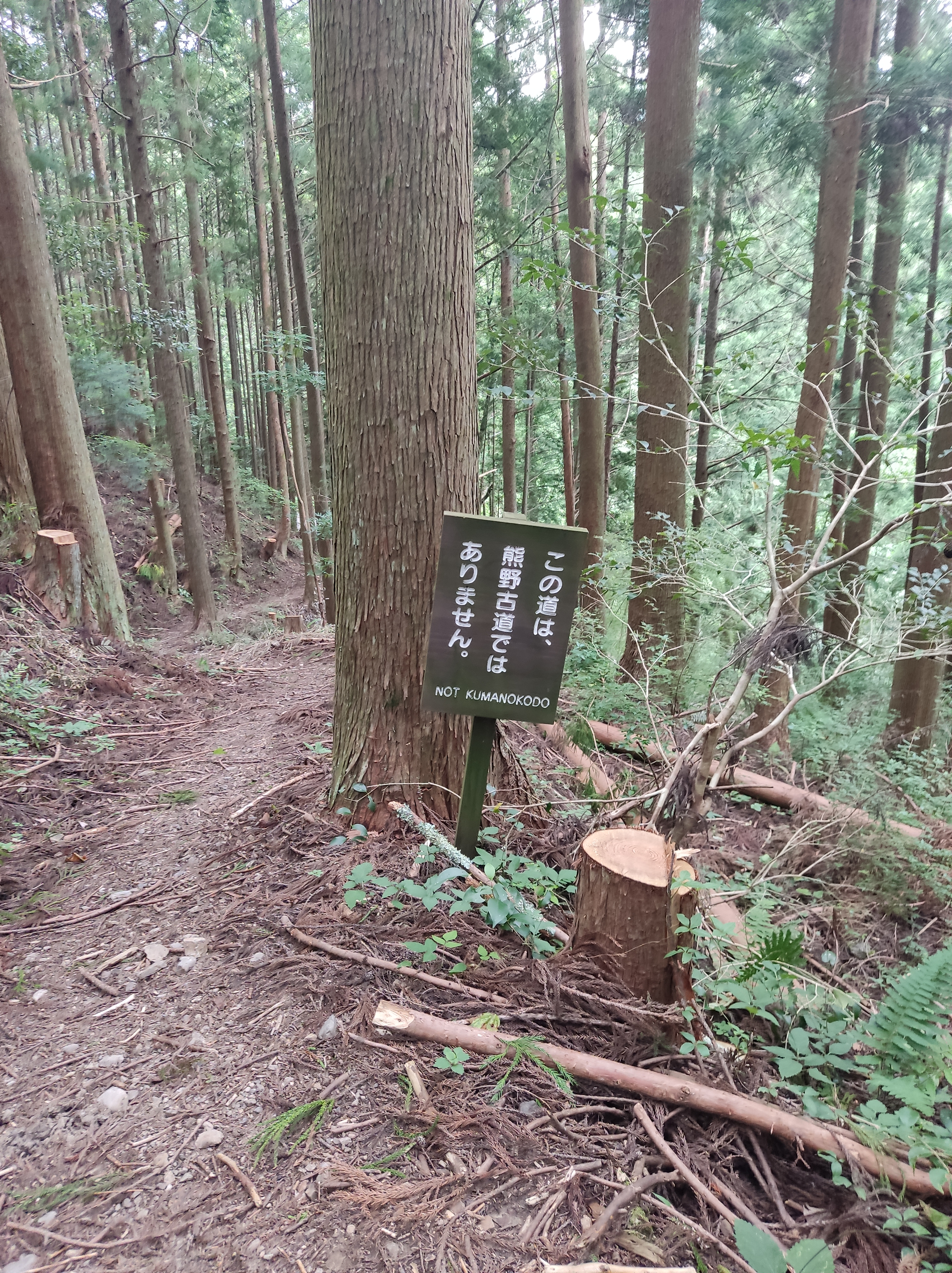


It was also pretty easy to navigate. We downloaded some maps from the official website and checked each morning that we knew where we were going. We also had our online maps on the go in case of emergency. Honestly though, the paths are so well signposted it is quite hard to go wrong – there are these handy “Not Kumano Kodo” signs on any off shoots. The paths are well maintained too.
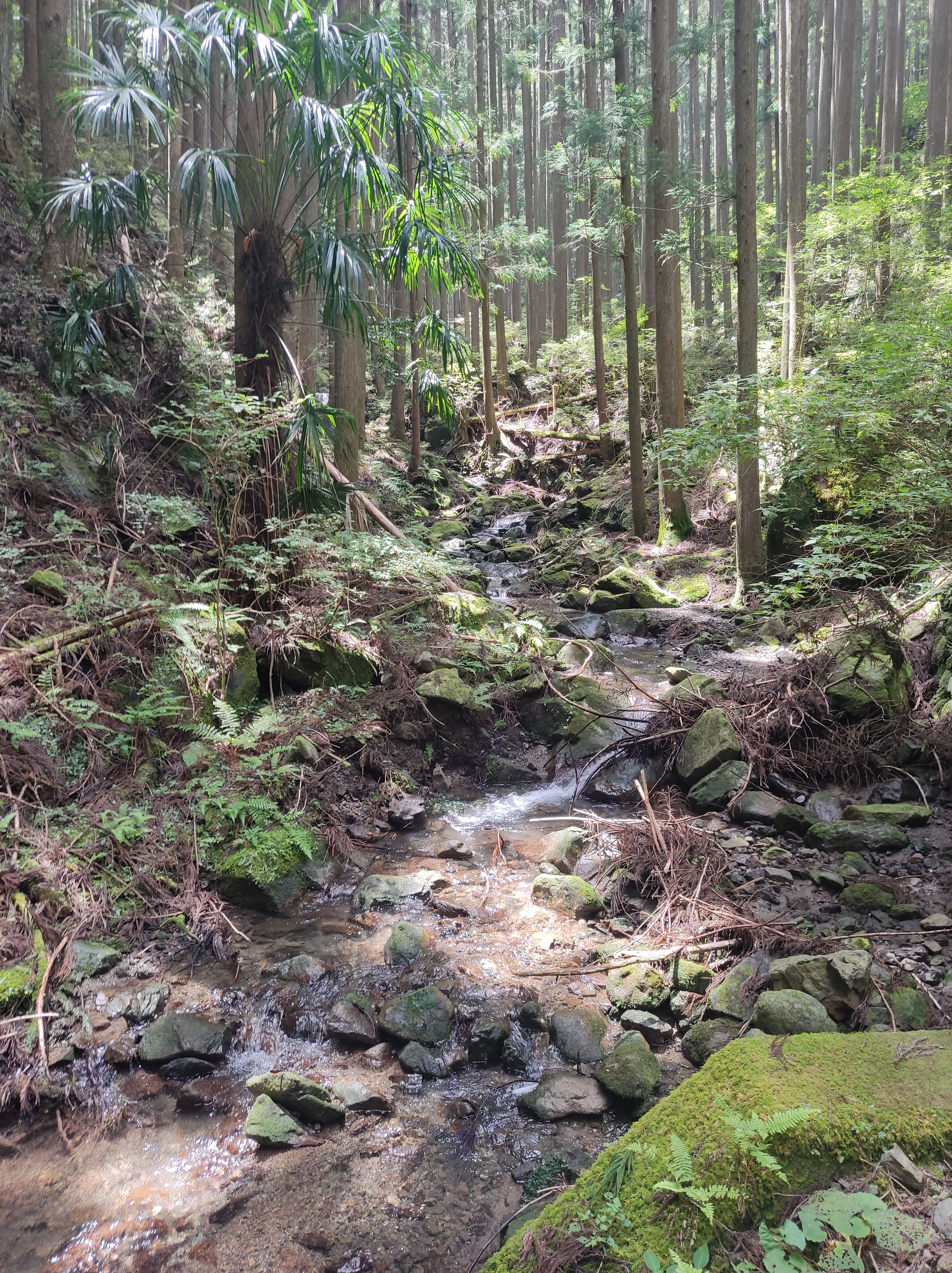

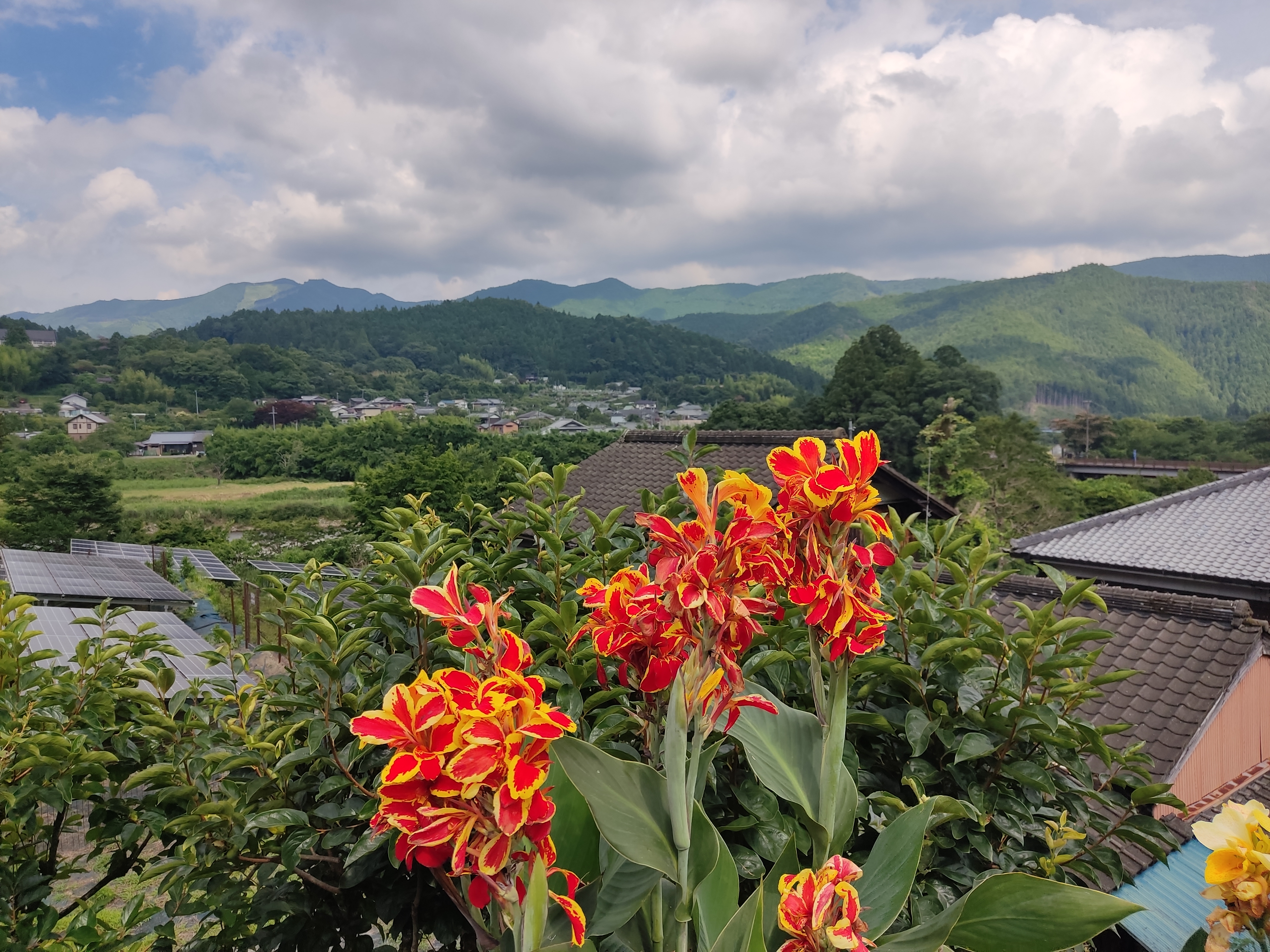
The walks were so beautiful, mostly wandering through forests and enjoying the sounds of birds and insects. There were lovely views across the hills, and forays through tiny towns full of greenery.


And the shrines were very impressive! Some were just small shrines on the trail, and others were huge complexes. We saw ancient trees, waterfalls, pagodas…everything was beautiful and interesting.

Even if you are, like us, not walking the trail for spiritual reasons, I think it’s still well worth it for nature lovers. The scenery was spectacular, and it was great for us to connect with a whole different side of Japan. And now you know that vegans won’t starve on the trail either!

 Herbivores' Heaven
This was so helpful to read through! My wife and I will do the KK in late September this year and we are both vegan. I was little worried about what the vegan options would be, but this post has put me at ease. Thanks for writing it!
Thanks for sharing this – so helpful! What time of year did you walk the trail? Thanks! 🙏
We were there in July – it was very hot and humid, with some rainy days.