
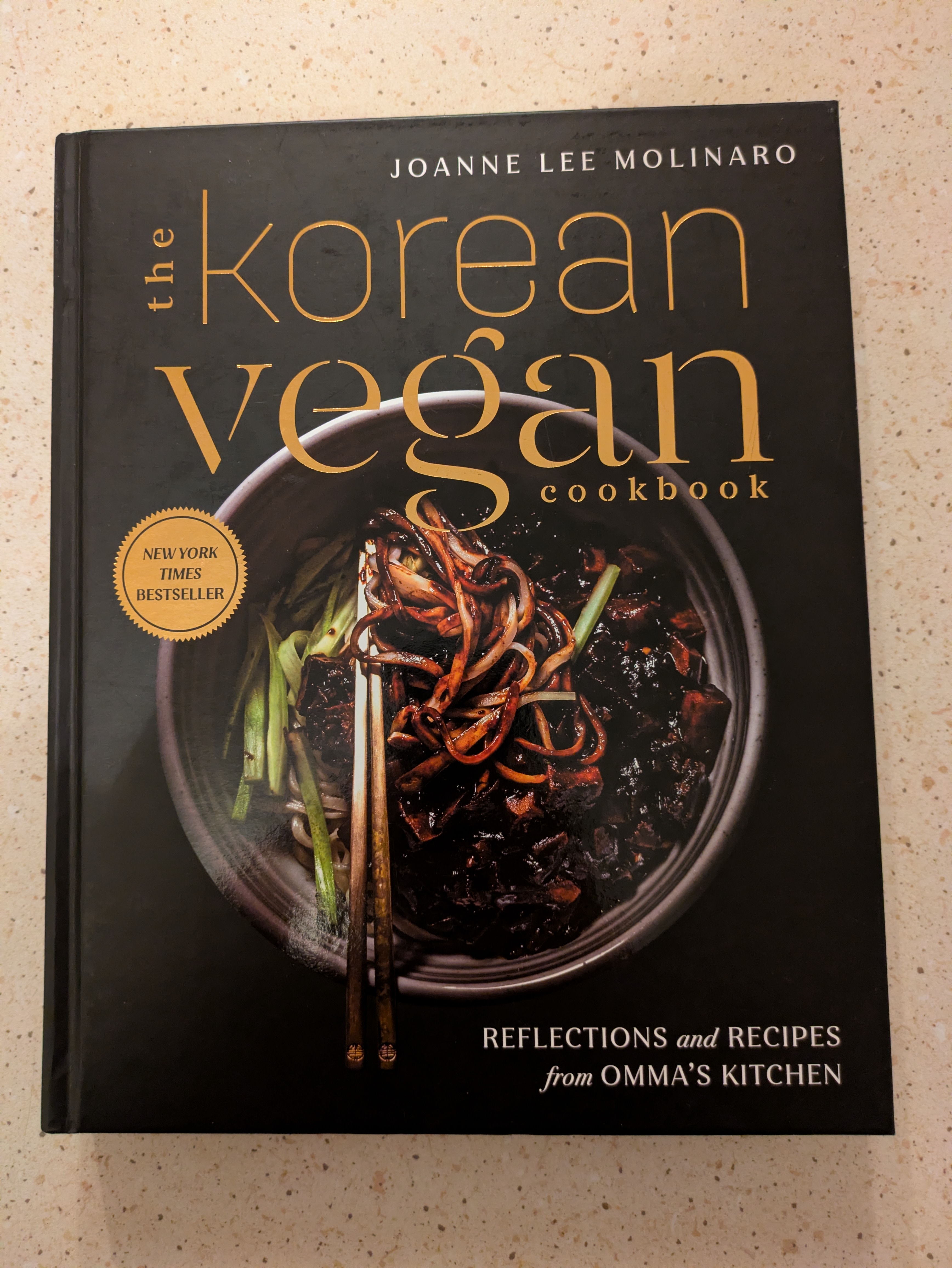
Last Christmas, I gave Dr HH a cookbook and selection of Korean pastes and seasonings so we could spend the year enjoying tasty Korean food. We found Korea the least exciting culinary destination on our trip to east Asia last summer, but we’re not giving up on this cuisine yet! Armed with Joanne Lee Molinaro’s The Korean Vegan, we have tried a lot of new (to us) dishes and broadened our understanding of typical Korean meals.
We didn’t make anything from the sections: basics, breads, and kimchi and salads. Here’s what we did try.
Banchan (Side Dishes)
Gamja Jorim (Braised Potatoes)

While we fantasised about making a full feast with an array of banchan, which we loved so much in Korea, we actually just made one dish from this section and served it as a main instead. It made for quite a quick and easy dish for lunch, scaled up a bit and served with some rice. The potatoes were nice and soft, with a few tasty vegetables, all in a sweet and savoury sauce. Like a lot of dishes in this book, our version looked a bit saucier than the pictures.
Soups and Stews
Spicy Doenjang Chigae (Fermented Soy Bean Stew)

I followed this recipe exactly, though I possibly diced my potatoes too small – I made my potatoes, courgette, and onion the same size, but the recipe later referred to taking 20 minutes to cook through the potato, which means the pieces should have been larger. I enjoyed this texture though, and have stuck to it on subsequent attempts. It was a tasty dish. The doenjang (which I’d never tried before) reminded me a bit of miso and was quite nice combined with the spicier seasonings. This time, my version was significantly less saucy than the picture in the book – partly because I cooked it in advance and then reheated it later. I’ve made this several times, switching now from firm to silken tofu due to personal preference. It’s a nice easy stew for a work night.
Soondooboo Chigae (Silken Tofu Stew)
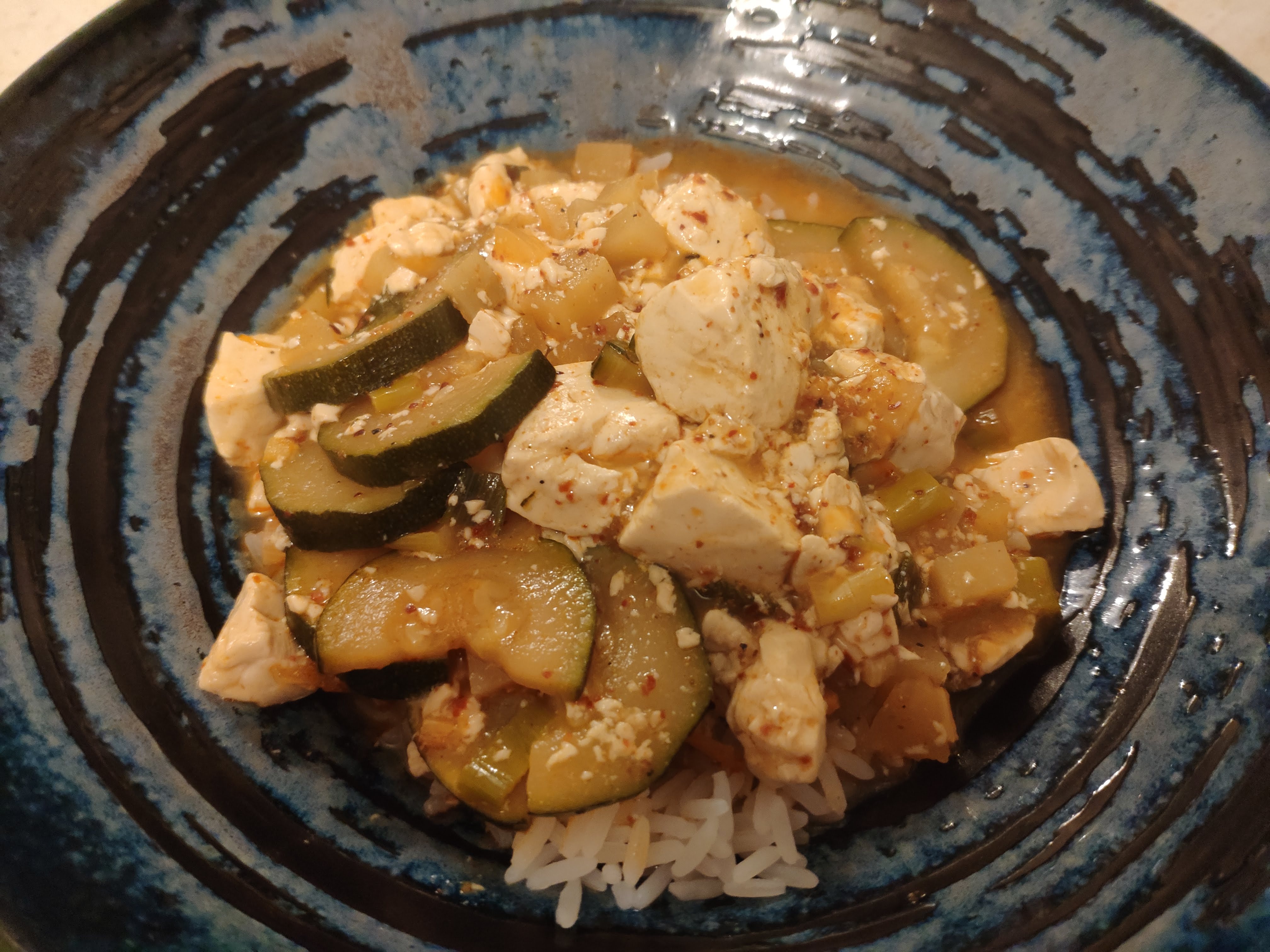
This one was spicy! It was also easy to make. I used regular courgette rather than the recommended hobak, and a stock cube rather than homemade vegetable broth. The only real seasoning is the gochugaru, which brings a lot of heat. I loved the silken tofu, and the other vegetables were tasty, plus it was very easy to just chuck it all together. I have toned down the spiciness on subsequent occasions, but Dr HH loved this first iteration!
Noodles and Pastas
Jjajangmyun (Black Soybean Noodles)
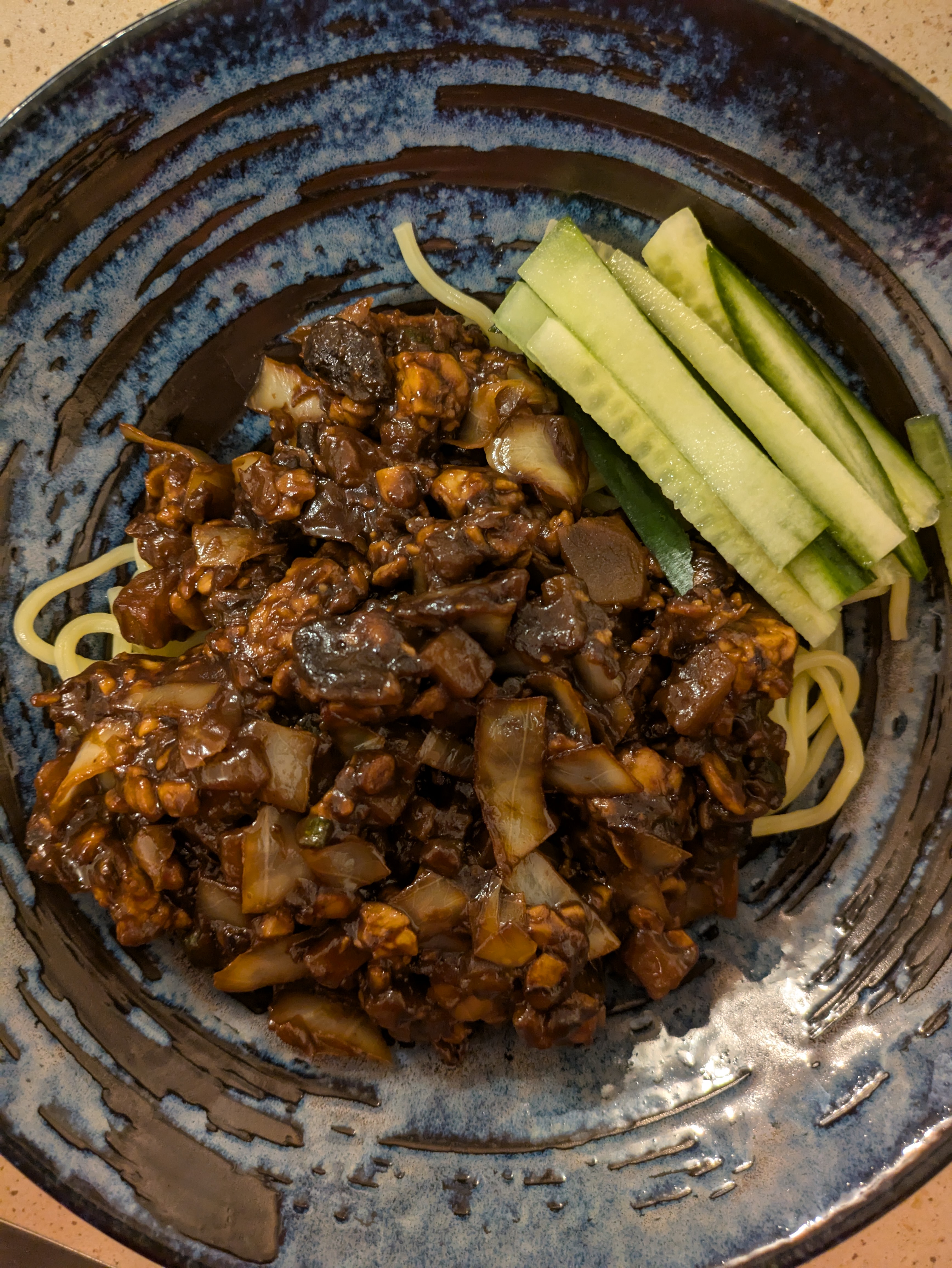
This recipe could be more specific – it calls for “half a soy fillet”, and suggests alternatives to this such as tempeh but no sense of quantity. How big is a soy fillet?! I did use tempeh, but wasn’t sure how much to chuck in, and it broke up quite a lot. The recipe also calls for tiny quantities of cabbage and courgette, which feels a bit wasteful and requires further planning for using up the rest of the veg. It’s so hard to see the dish in this photo in the book: it’s dark food in a dark bowl on a dark background. Help me out a bit, I want to get a sense of how the dish looks while I’m working on it!
Bar and Street Food
Curried Tteokbokki Skewers

Dr HH loves tteokbokki, so he was excited to try this. He didn’t skewer them, and we lack a good griddle pan, so he just served them in the sauce. It was a tasty sauce, well flavoured. It was also easy to make. He found that the suggested amount of vegetables was very small (a common theme) and added more peppers and onions to the pan when cooking to bring a bit more variety to the plate.
Cheesy Hotteok (Fried Stuffed Pancakes)
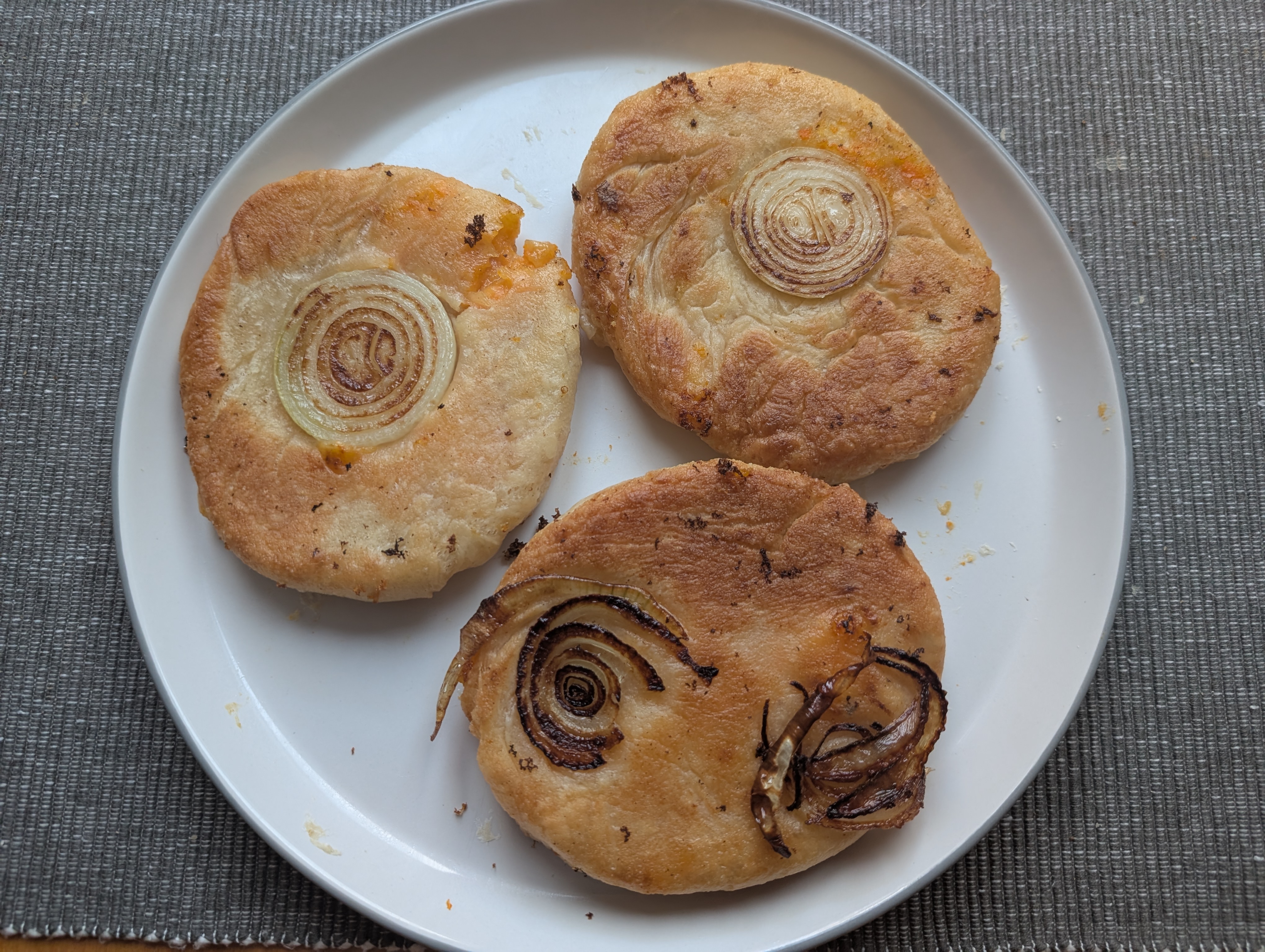
These were delicious, one of the highlights of the book! This was another one for Dr HH. He was a little bit skeptical about the cheesy filling made from potatoes carrots and vegan cheese, but it worked very well. They were relatively easy to make, and he prepared them in advance and heated them in the oven at meal time. There was a good crisp outer, they were fluffy inside, and the cheesy filling melted and oozed nicely. The onions pressed into the bottom of the pancake added a nice bit of extra texture and flavour. He never got round to making the sweet ones, despite having his eye on them. Fingers crossed for 2026!
Main Dishes
Mapo Dooboo (Mapo Tofu)

I can’t resist a mapo tofu! This differed a little from my usual recipe in that it didn’t include any Sichuan peppers. Instead, the gochugaru added some spiciness and red colouring. I found it a bit too spicy, but it was perfect for Dr HH, and I would definitely make it again. I followed the recipe, but doubled the amount of shiitakes, for fun, and I don’t regret it as they were really fun and peppery.
Kkanpoong Tofu – spicy crunchy garlic tofu

This dish consists of nice crispy tofu in a spicy sauce, and Dr HH served it with rice. It was very tasty and hit the common notes of a bit sweet and a bit spicy.
Mushroom galbi
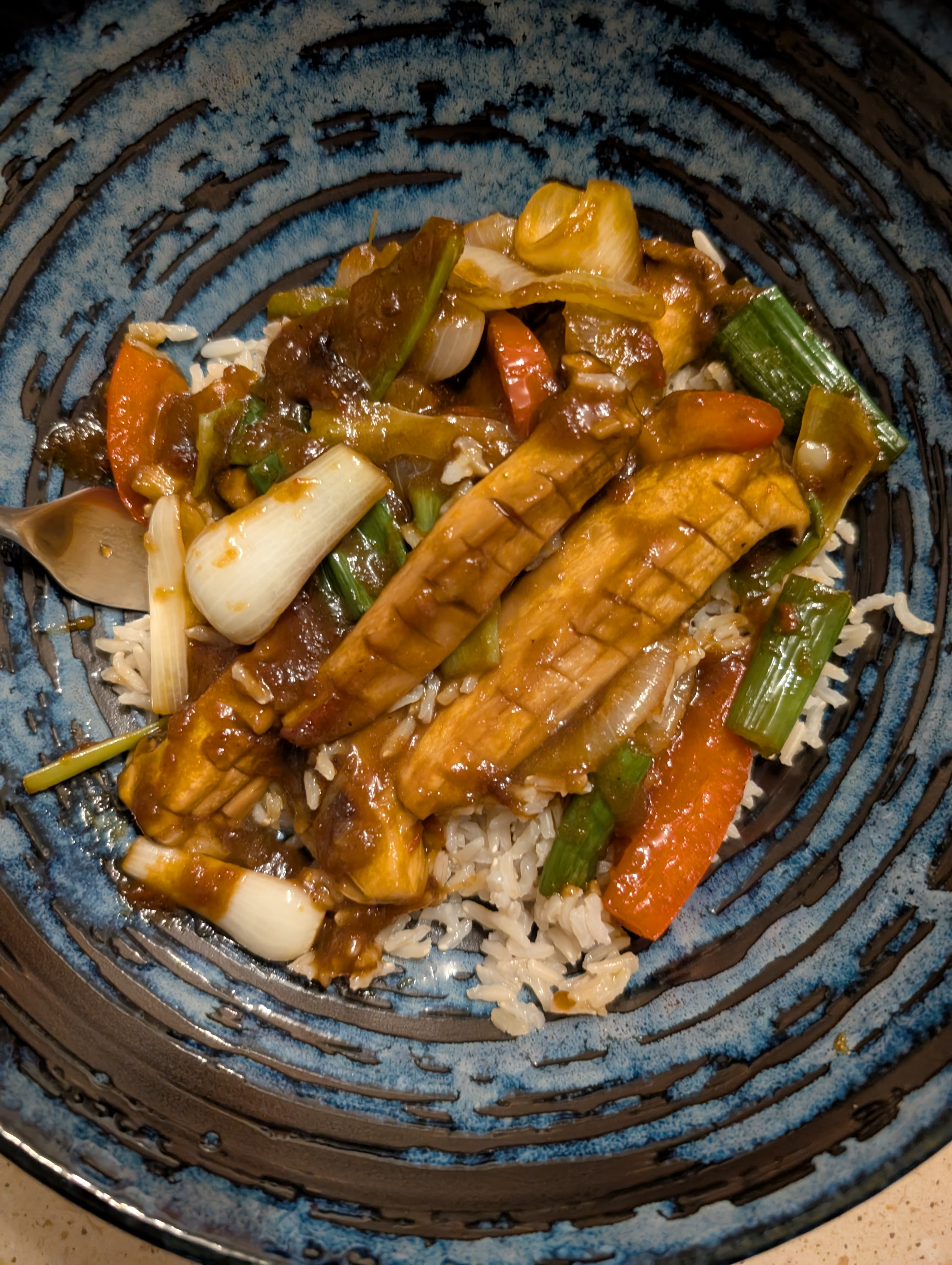
Dr HH made a batch of Omma’s BBQ sauce to use in several dishes, starting with this one. It was easy to make, as he just had to blitz a load of ingredients and then simmer it for a bit. Again, without a griddle pan we didn’t manage to get any char on the mushrooms. And again, we added extra vegetables compared to recipe suggestions.
Bulgogi
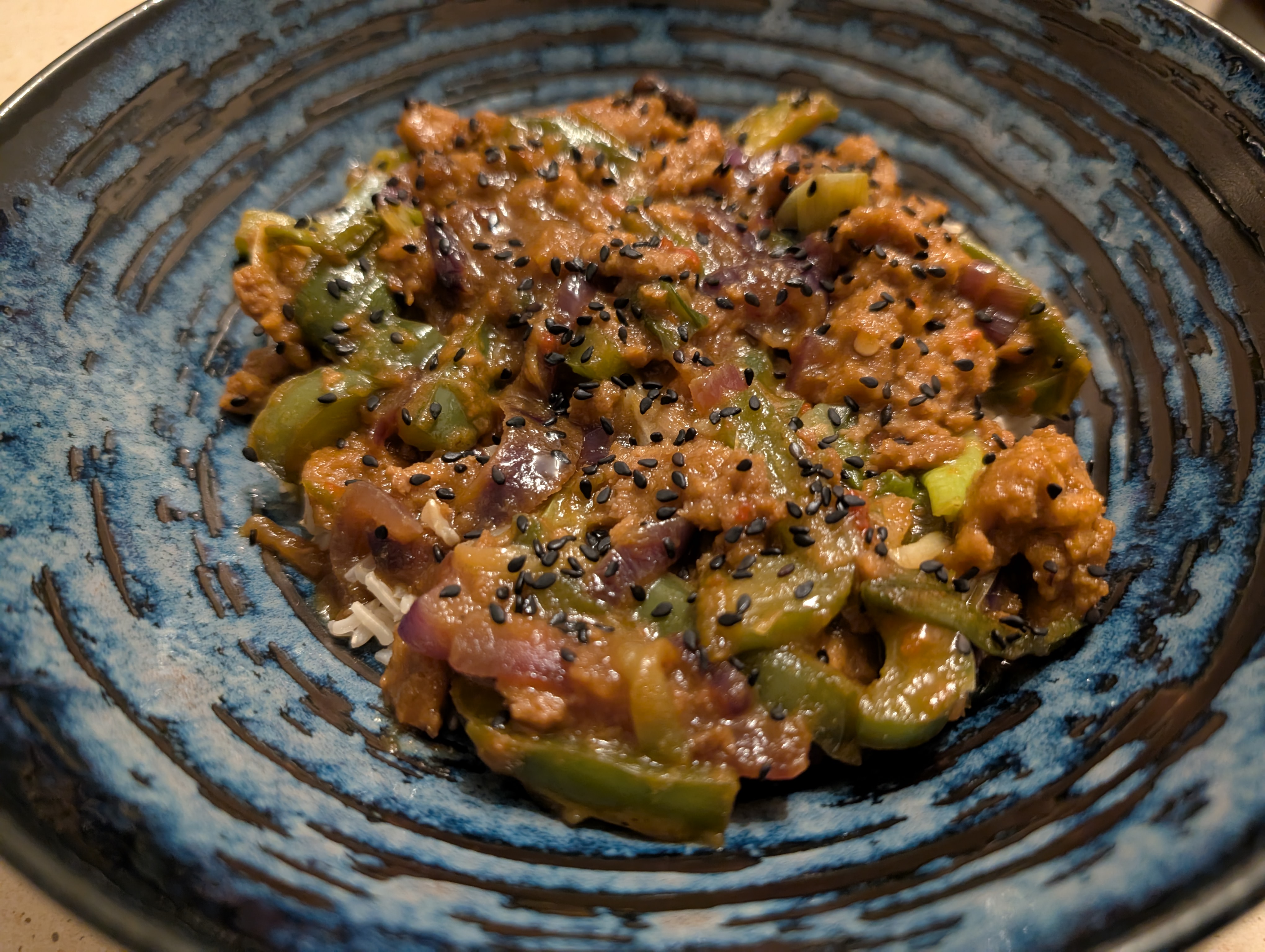
Tasty stuff again using the BBQ sauce. Dr HH used a lot more sauce and vegetables (again), so it looks very different to the dish in the book, but it was tasty and pretty easy to make overall.
Lasagne with Gochujang Red Sauce
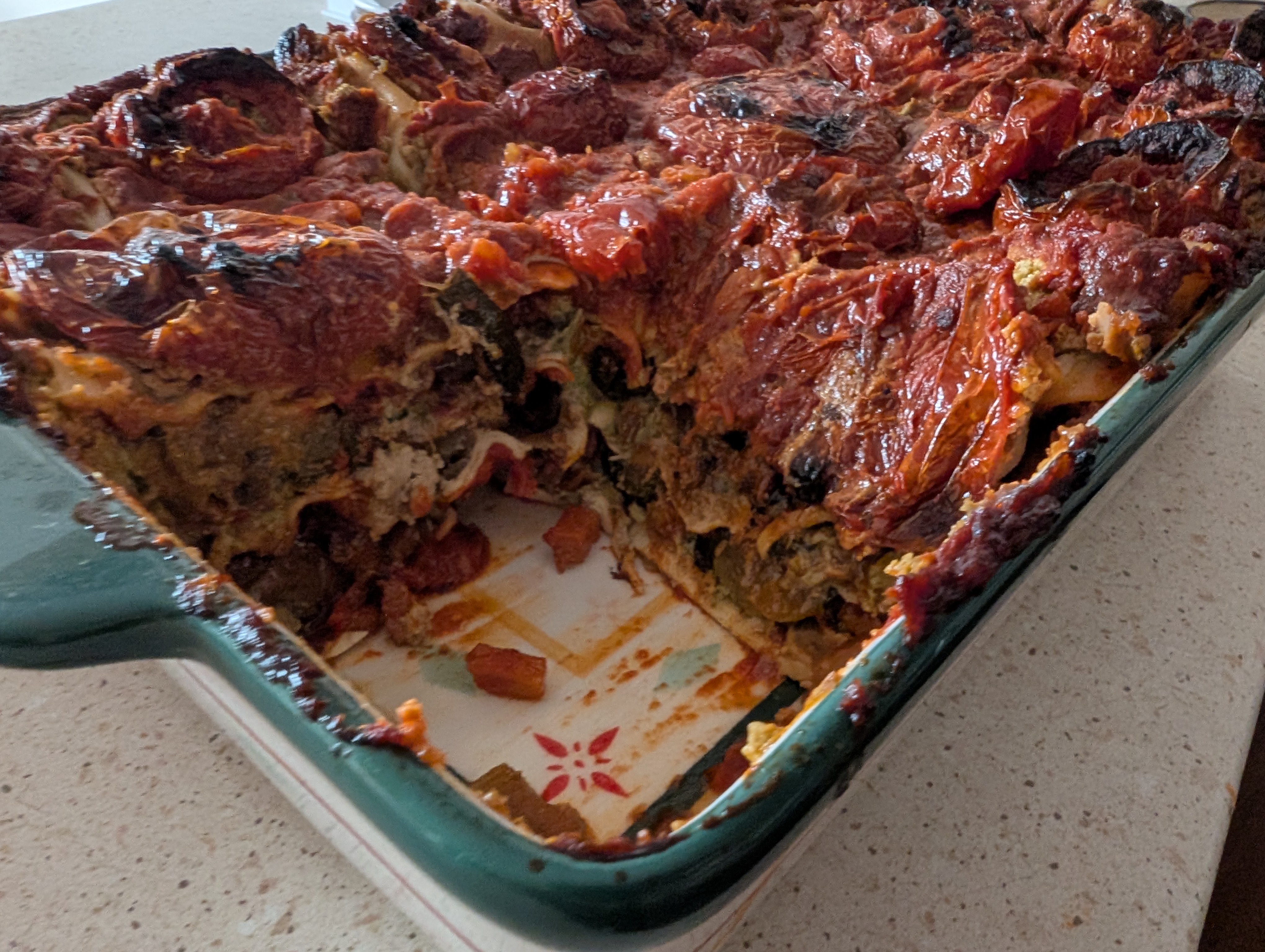
This was an endeavour! The recommendation is to make various components before the day of cooking as there is a lot to do. Dr HH spent almost a week of his summer holiday bringing this together, and fortunately it was a labour of love. The components were: oven roasted tomatoes, roasted courgettes, red sauce, avocado bechamel, tofu ricotta, mushroom filling (which involves Omma’s Korean BBQ sauce again), and some roasted doenjang-glazed onions (found in the banchan section). It was a lot of work but the end result was delicious. The Korean flavours worked throughout the dish. It was a bit sweet and a bit spicy, and the mushrooms made a satisfying filling.
Dooboo Jorim (Braised Tofu)
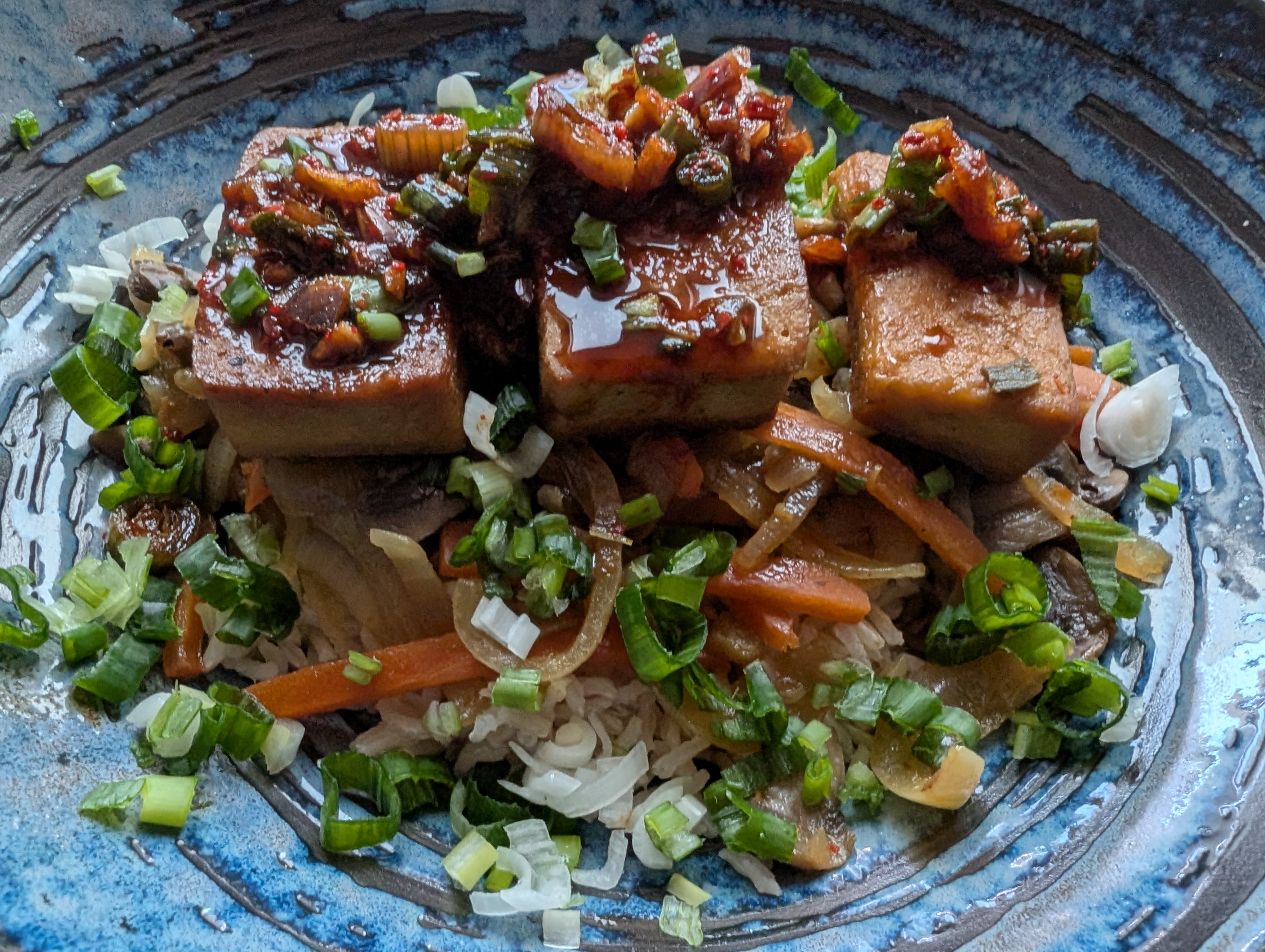
This dish has some things in common with the crunchy garlic tofu. A lot of the flavours were quite similar, but the tofu didn’t have the same crispy coating. There are also a few more vegetables in the mix, and as usual Dr HH added more as there always seem to be so few in the recipes. This used the spicy soy sauce dressing from the basics section, which was soy sauce with a few extra bits added to make it more fun. This one was nice, but not an instant classic like some of the others.
Sweets
Chocolate Chip Paht (Sweet Red Bean) Cookies

I find myself a bit reluctant to try red bean sweet dishes when I’ve travelled to east Asia, because beans just don’t sound dessert-appropriate to me. But I have had them and I know it works! I bought a packet of red bean paste so I could try a couple of the sweet dishes. For these cookies, I followed the recipe exactly, but the method said to remove them from the oven after 11 minutes when they still looked underdone, so I kept them in longer. The recipe suggests that the red beans makes the cookies lighter and chewier. They felt quite heavy to me, though they were chewy. They had a really nice crispiness to the outside which I liked, but they won’t be replacing my go-to cookie recipe any time soon.
Paht (Sweet Red Bean) Marble Cake
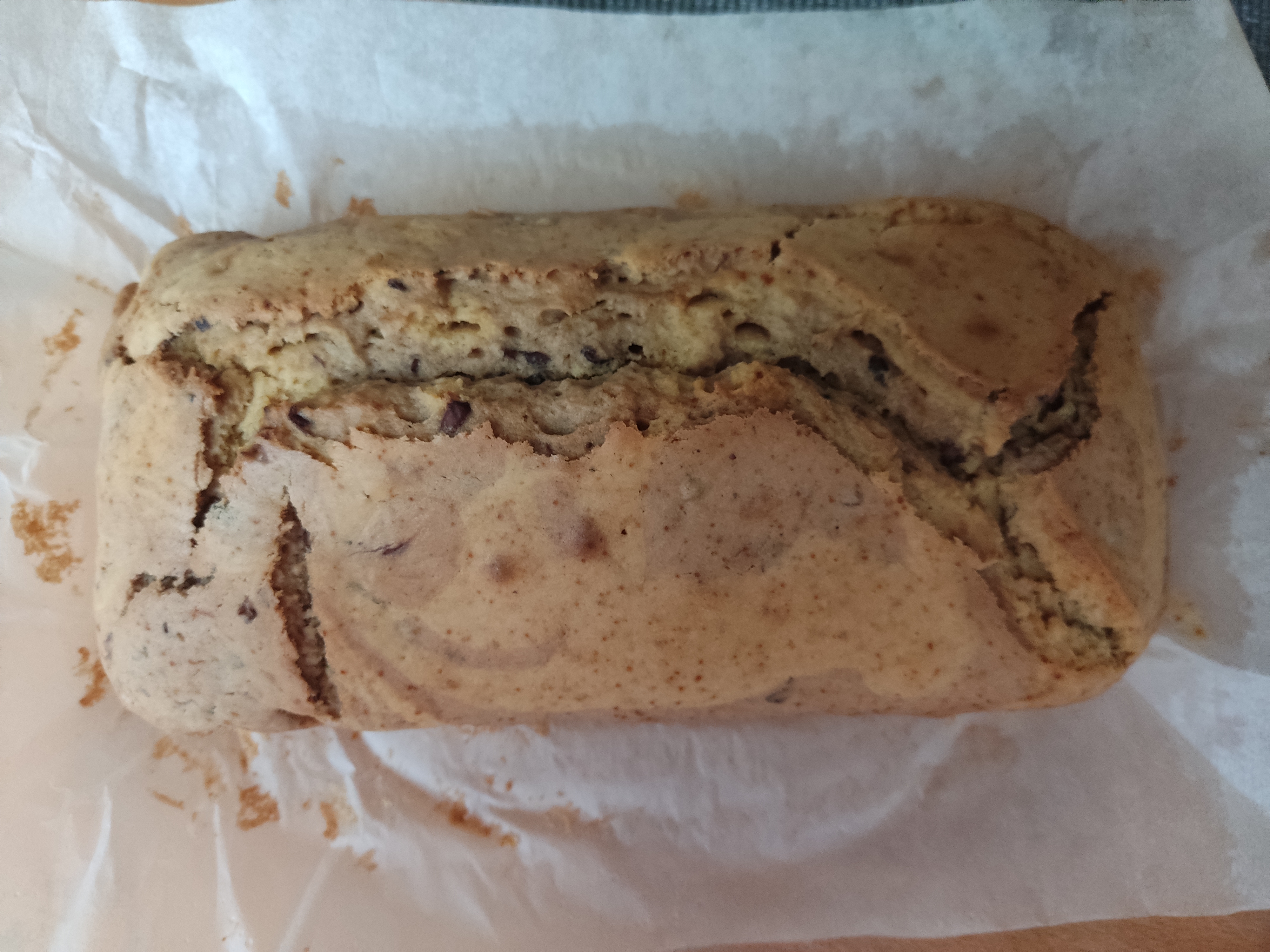
Continuing on with my packet of red bean paste! I made this as a loaf rather than the recommend bundt cake, and baked it for 45 minutes rather than 50-55 as recommended, as it looked done. I couldn’t get the milk and vinegar to curdle, but the mixture curdled when it was added, so maybe that’s alright. The paste doesn’t actually create much of a marble effect, and the recipe calls for red food colouring to achieve it, which I didn’t use. Without food colouring, it’s not a very dramatic colour contrast at all. It’s a tasty cake and a nice sponge, but not mind-blowing and again I’m not totally sure what the red beans are adding.
Verdict
I really enjoyed this book, and we plan to continue using it next year – trying some more recipes and revisiting some of our favourites. In general, we added more vegetables to every dish to make it more substantial and avoid waste. We didn’t need too many specialist ingredients – there’s a lot you could make without ordering online. It was nice to try a diverse range of Korean dishes, when I feel like in the past I haven’t seen that many different options on menus. I would definitely recommend this, it’s not as daunting as you might expect and there are loads of fairly straightforward rice-veg-tofu dishes that are flavoursome and easy to whip up. I think we’ll spend a bit more time exploring this book before we try the author’s newest publication, but it’s definitely on my radar.

 Herbivores' Heaven